News
Final Call for Businesses - last chance to participate at the EcoMobility World Festival!
Don't forget our Business Liaison is now finalizing arrangements with companies to participate in the vehicle exhibition, test tracks and ecomobile neighborhood.
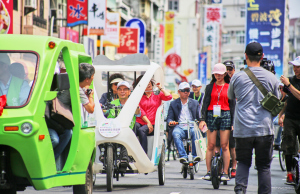
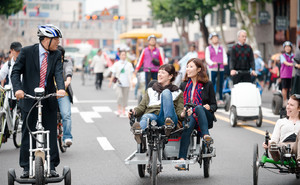
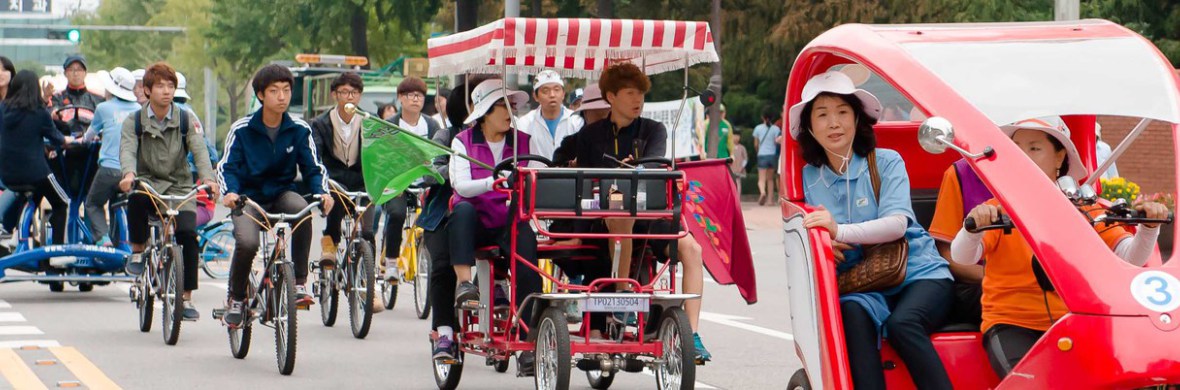
Manufacturers of bicycles, scooters, tricycles, segways, velo-taxis, cargo-bike, light electric vehicles, etc. or designers of prototypes: demonstrate your ecomobile products to decision makers and end users in a unique, international and real life city environment.
Get in touch today to explore the possibilities to have your vehicle featured at this unique EcoMobility event!
Let people try your product and give their feedback. Exhibitions and various events in the Festival area will be the location of your showcase.
Have a look at the
Business brochure or contact
ecomobility.business[at]iclei.org
Sustainable transport infrastructure, liveability, health and prosperity – an observation
By Greg Mews, Active Living Coordinator at the Heart Foundation and Adjunct Professional Associate University of Canberra
Imagine a world of urban mobility where you don’t have to think about how much fuel costs today, about how long you will be stuck in traffic on your daily commute to work, about the perceived unsafe environment around your local school caused by the traffic or how hard it is to find a car park near your destination. Imagine urban systems that support a zero transport emission future, that foster social cohesion and can enable better health outcomes for all people who live, work and play there. This scenario can work and is being executed in an open lab environment in several places around the globe. New integrative approaches, smart evidence based policy decision, long term political commitment and leadership, concerted efforts of industry, academia, governments and non government partners including holistic cost benefit modelling around sustainable transport infrastructure led to a trial of a new generation of mobility that is truly sustainable. EcoMobility means an integrated form of environmentally sustainable mobility that combines the use of non motorized forms of transport including the use of public transport to allow people to move in their local environments without relying on privately owned motor vehicles. It includes those forms of personal mobility undertaken by walking, bicycling, wheeling and public transport powered by renewable energies. For example cities such as Freiburg in Breisgau (Germany), Portland in Oregon (USA), Muenster (Germany) or Suwon (South Korea) are taking on this vision. These cities are committed to transforming their transportation systems and creating new markets for symbiotic economies with a whole of system approach that benefits all people.
EcoMobility World Festival June Newsletter
The
June edition of the EcoMobility World Festival newsletter is out now! It is possible to browse the latest news about the Festival events.
'One month, one neighborhood, no cars!'
If you want to receive monthly updates on the EcoMobility World Festival, taking place in Suwon (South Korea) in September 2013, please
subscribe to the Newsletter.
Alliance Chair: Changwon City
The EcoMobility Alliance is currently chaired by Changwon, Korea. Changwon is a city renowned for its environmentally-friendly developments and its innovative and high-tech NUBIJA public bike system. As Alliance Chair, the city supports the exchange of expertise among ambitious entities in the field of EcoMobility.
Featured Document
Description document
This primer focuses on door to door multi-mobility mapping and piloting (and related industry development. The primer describes and documents new integratrive approaches, guiding principles, and living examples that will serve businesses, community leaders, transportation practitioners, and policymakers who are interested in improving and transforming their transportation systems (and related economies) as whole systems. The aim is to contribute to advancing livability, sustainability, and economic vitality in communities and city regions of the world through systems-based transportation.